


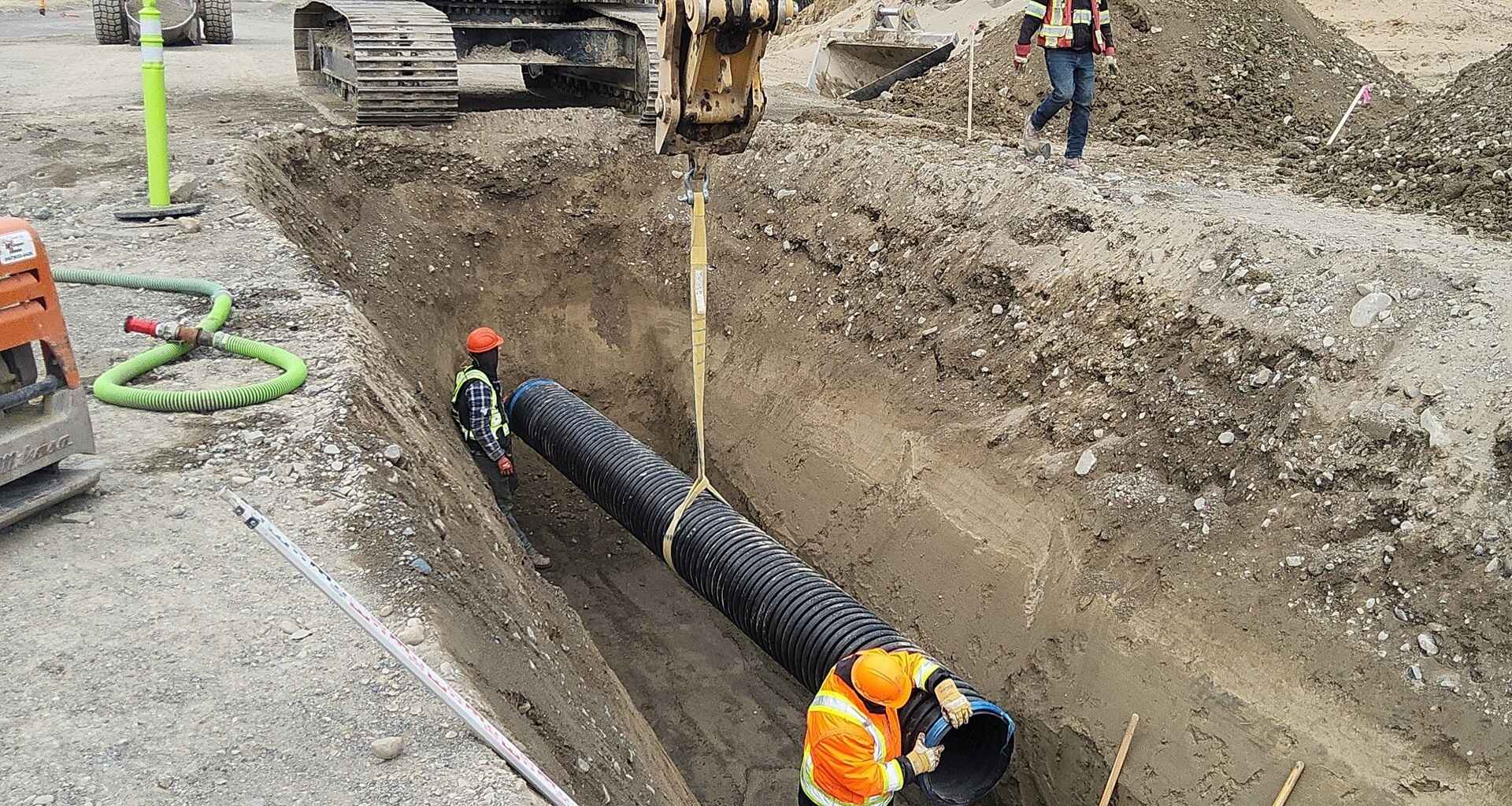
Drainage is a fundamental part of almost every construction and civil engineering project. While some drainage systems can be installed relatively close to ground level, certain developments require pipes and infrastructure to be positioned much deeper underground. This is where deep drainage comes in.
Deep drainage requires careful planning, specialist equipment, and experienced contractors to ensure work is completed safely and effectively.
What Is Deep Drainage?
Deep drainage generally refers to drainage and sewer systems installed at significant depths below ground level. These systems are commonly required when new infrastructure needs to connect with an existing sewer network or when site conditions mean that a shallower drainage system isn’t practical.
Deep drainage works can form part of:
- Sewer connections and diversions
- Surface water drainage systems
- Highway drainage
- Large residential developments
- Commercial and industrial developments
- Wider infrastructure projects
Because of the depths involved, these projects can be considerably more complex than standard drainage installations.
When Is Deep Drainage Required?
There are several reasons why engineers may specify deep drainage.
One of the most common is the need to achieve the correct gradient. Many drainage systems rely on gravity to move wastewater or surface water through pipes. The depth and gradient therefore need to be carefully calculated to maintain an effective flow.
Deep drainage may also be necessary when connecting new infrastructure to an existing sewer located well below ground level.
Other factors can include:
- Existing underground utilities
- Changes in ground levels
- Local topography
- Groundwater conditions
- The location of existing drainage infrastructure
Every site is different, which makes investigation and planning particularly important.
What Are the Challenges of Deep Drainage?
Working at greater depths introduces additional considerations that must be carefully managed.
Ground Stability
Excavations need to remain stable throughout construction. Ground conditions can vary significantly, so appropriate temporary works and excavation support may be required.
Groundwater
A high water table can make deep excavation more challenging. Water entering an excavation may need to be carefully managed before drainage infrastructure can be safely installed.
Existing Utilities
Construction teams must also consider existing water, gas, electricity, telecommunications, and other underground infrastructure before excavation begins.
Why Planning Is So Important
Thorough site investigations allow engineers to understand ground conditions and identify potential obstacles before work starts.
Effective planning can help:
- Reduce unexpected delays
- Identify existing underground services
- Determine suitable drainage routes
- Improve site safety
- Reduce the risk of expensive changes during construction
Working with an experienced sewer work contractor can also help ensure that drainage and sewer installations are coordinated with the wider civil engineering project.
Getting Deep Drainage Right
Deep drainage is often hidden once a development is complete, but its performance can have a significant impact on the infrastructure above it.
From highways and commercial sites to residential developments, correctly designed and installed drainage provides a reliable way to manage wastewater and surface water for years to come. By investing in proper site investigation, planning, and experienced civil engineering contractors, developers can address potential challenges before they become costly problems.